

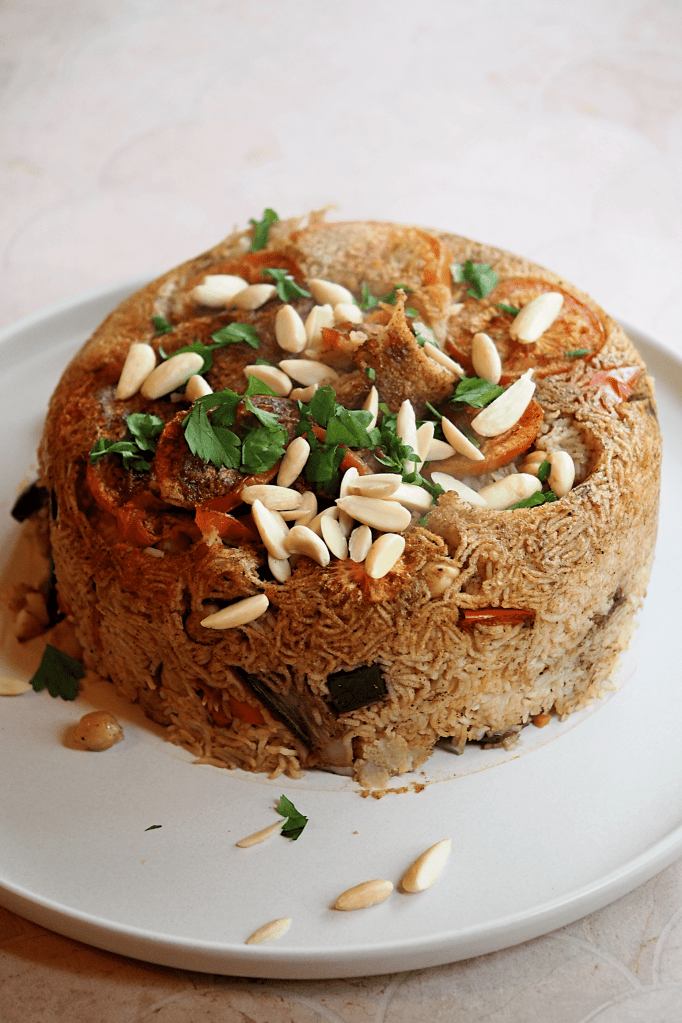
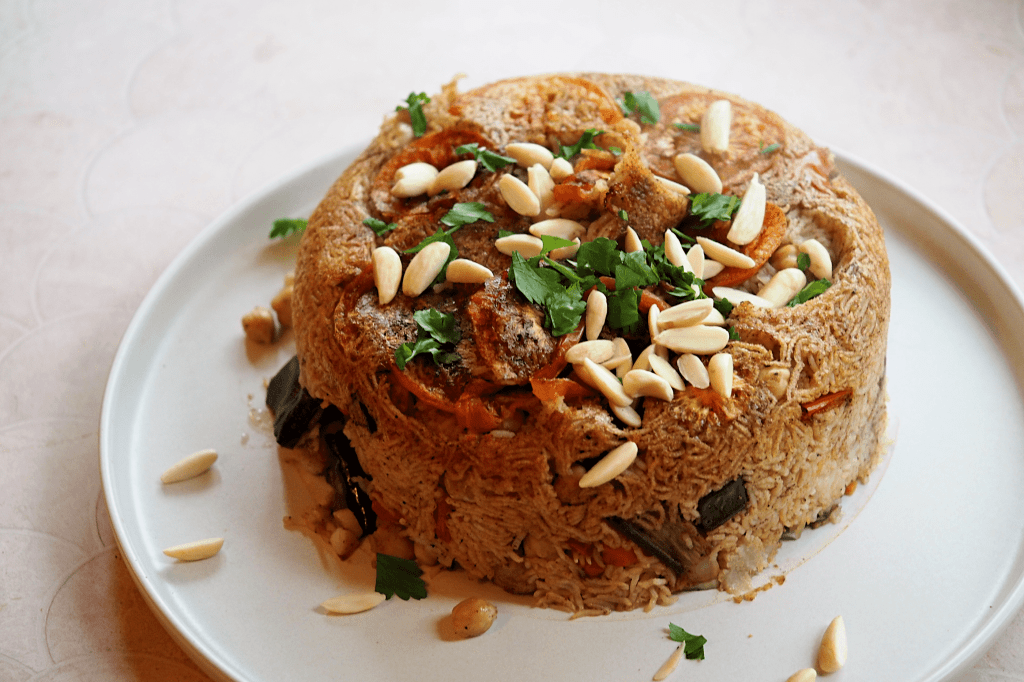
Today I’m sharing a dish I’ve tested out a good few iterations of (trying different recipes that included meat and then simply omitting it) and have tweaked to my personal preferences and to ensure maximum flavour using plant-based ingredients only. You pre-cook the vegetables within this dish then simmer it all with rice and stock until the moisture is absorbed, at which point you take your pan, put a plate on top of it and flip it to serve (hence the nickname of ‘upside-down rice’). Maqluba is a Palestinian dish and other variations can be found across the Middle East. Although we’re keeping it simple today; there are all sorts of beautiful presentations and designs that can be done with this dish. In dark times, food offers comfort and a way of fighting against cultural erasure. So, I hope I can do the dish justice and we can embody little of that idea today…
INGREDIENTS
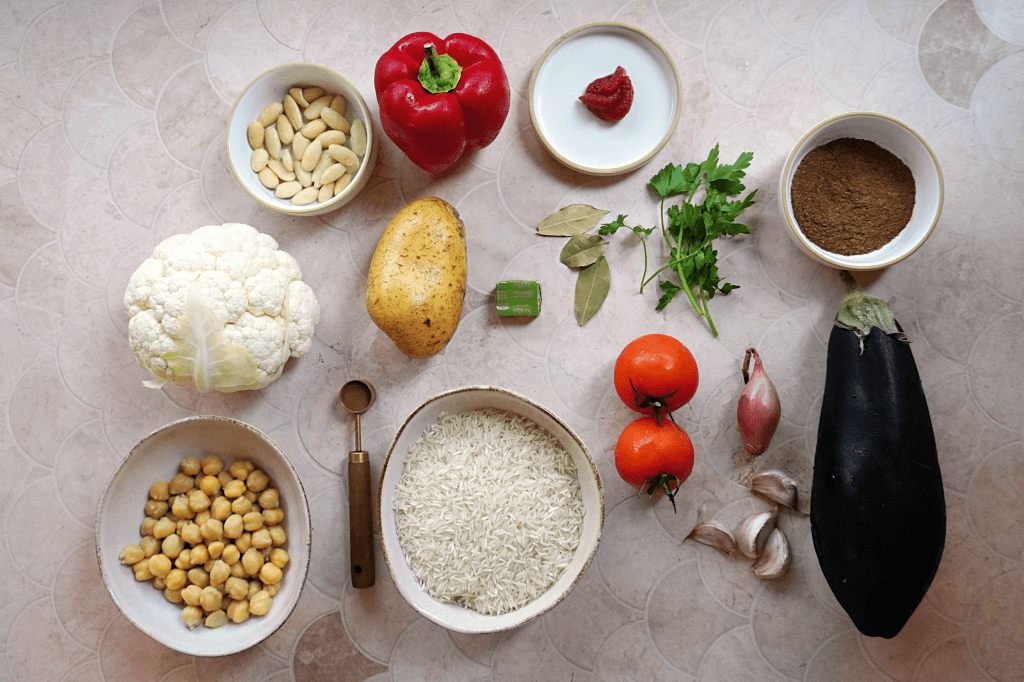
Carbs
Basmati (or any other long grain rice)
Chickpeas (pre-cooked)
Stock
Vegetable stock cube
Tomato paste (to add some richness)
Vegetables
Aubergine
Cauliflower
Red Pepper
Potato
Tomato (the only one of these vegetables that can’t be subbed out)
Spices
Baharat spice mix (traditionally used in this dish)
Bay leaves
Ground cinnamon or whole cinnamon sticks
Aromatics
Shallot
Garlic
Topping
Parsley, but mint and coriander also work (or use nuts if you’re out of fresh herbs – blanched almonds, pine nuts or crushed walnut are all great options)
Blanched almonds
Accompaniments
Yoghurt (I used Greek but obviously any plant-based alternative will do the job)
Simple salad (I just chopped up some cherry tomatoes, parsley and baby cucumber, seasoned and added some olive oil and lemon juice)
TIPS
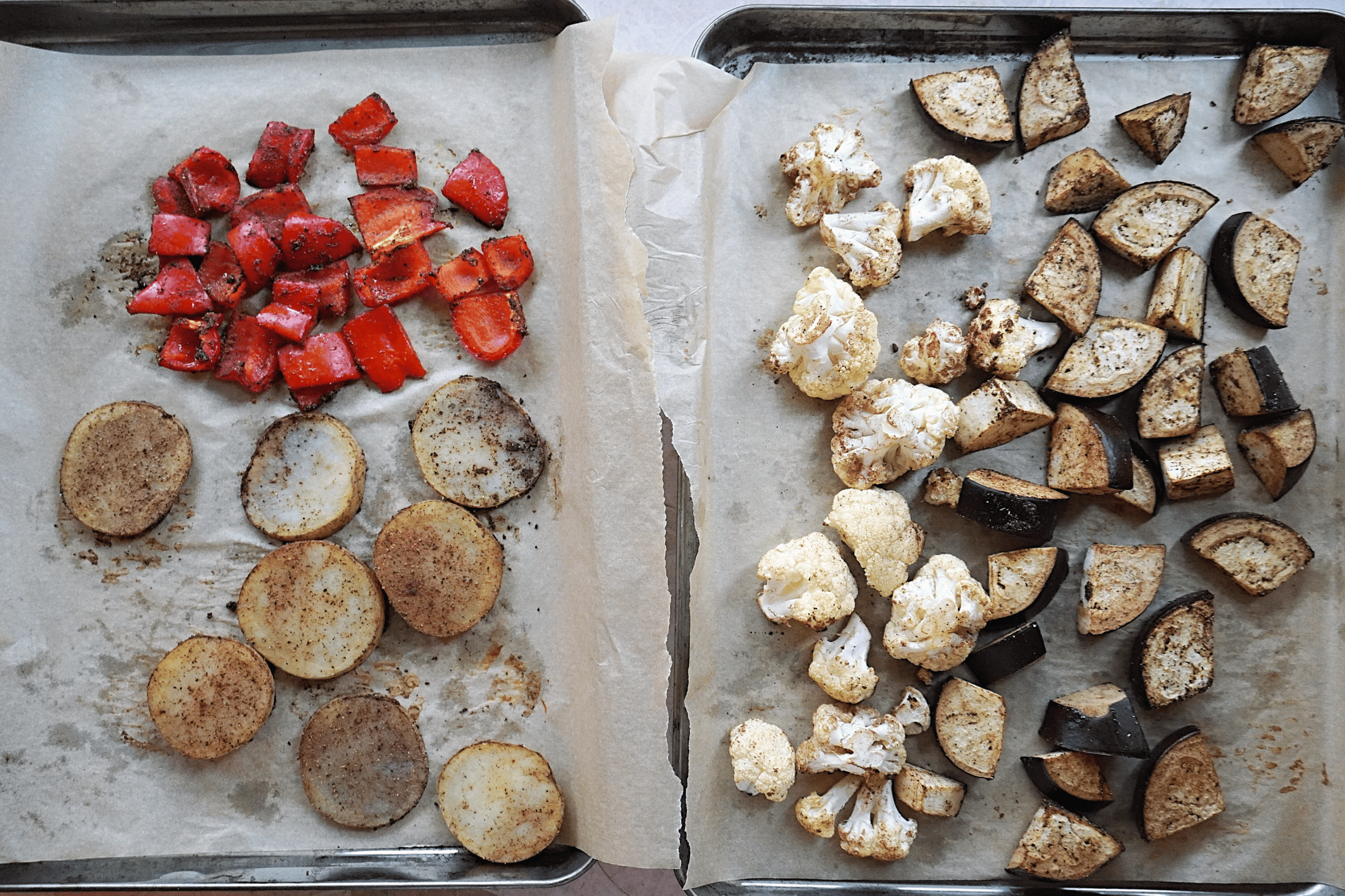
Whilst many of these components would traditionally be shallow-fried; to reduce the oil used and also so I can just throw everything in the oven and not have to think about it; I roast the ingredients.
Honestly, about 70% of your success with this dish is going to be down to the pan you use, so choose wisely! You will need an effective non-stick pan which is lightweight (for flipping) and has a handle. You also need to check that you have a plate in your collection that covers the top of this pan, because we’re going to cook the dish in it and then flip it out onto a plate, which it will then be served from.
The other important thing to note is that we are going to be seasoning each element of this dish individually and using our Baharat spice at each stage to enrich it with as much flavour as possible. I have also added tomato paste to the vegetable stock for richness. This should all help to imbue as much flavour as possible for a plant-based version of this dish (traditionally the liquid from the meat is used as the basis for the stock which is naturally packed with flavour, so we have to work a little harder with just our veggies). You can see in the below images of before and after cooking how all of this infuses throughout the entire dish.
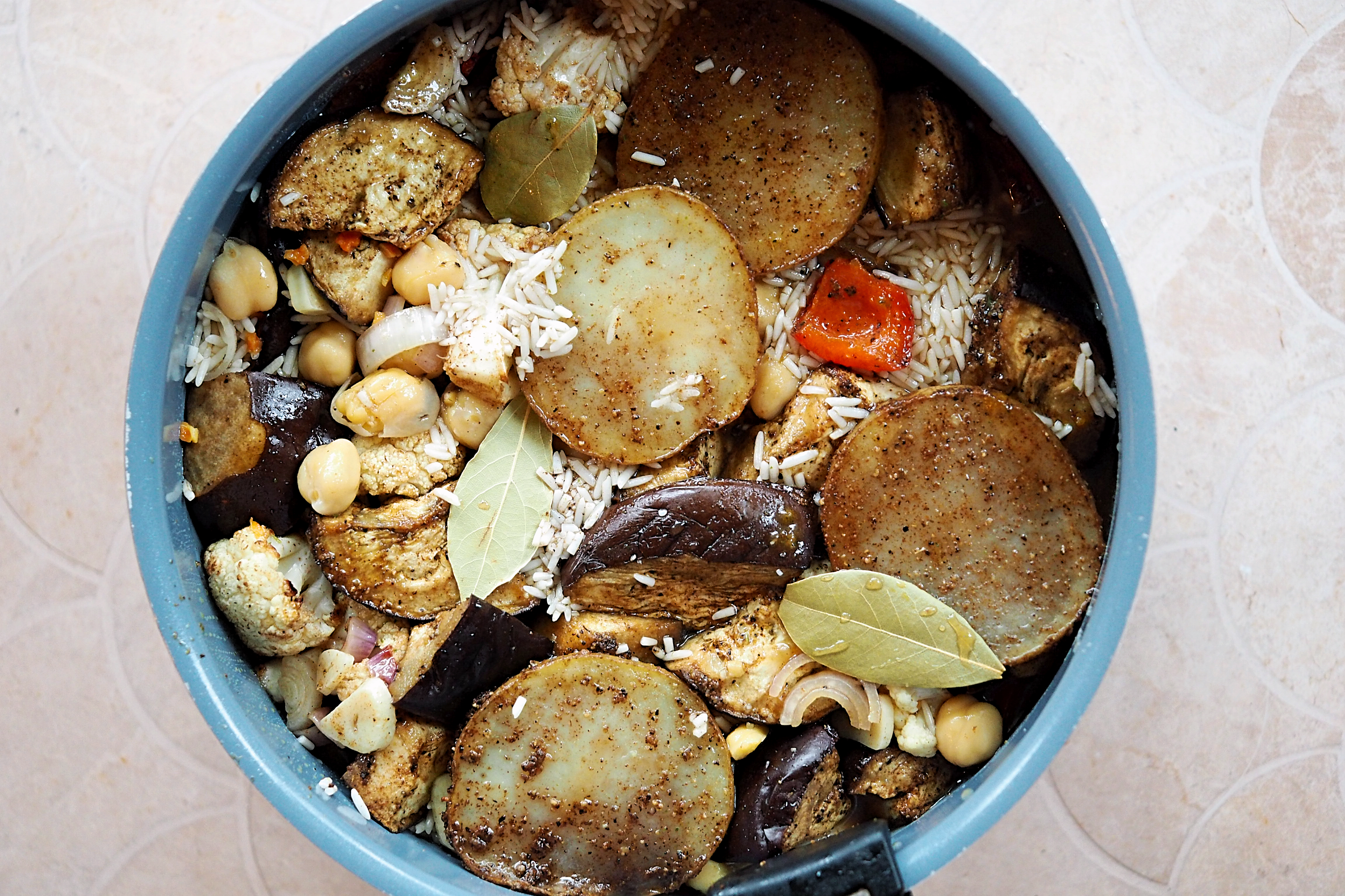
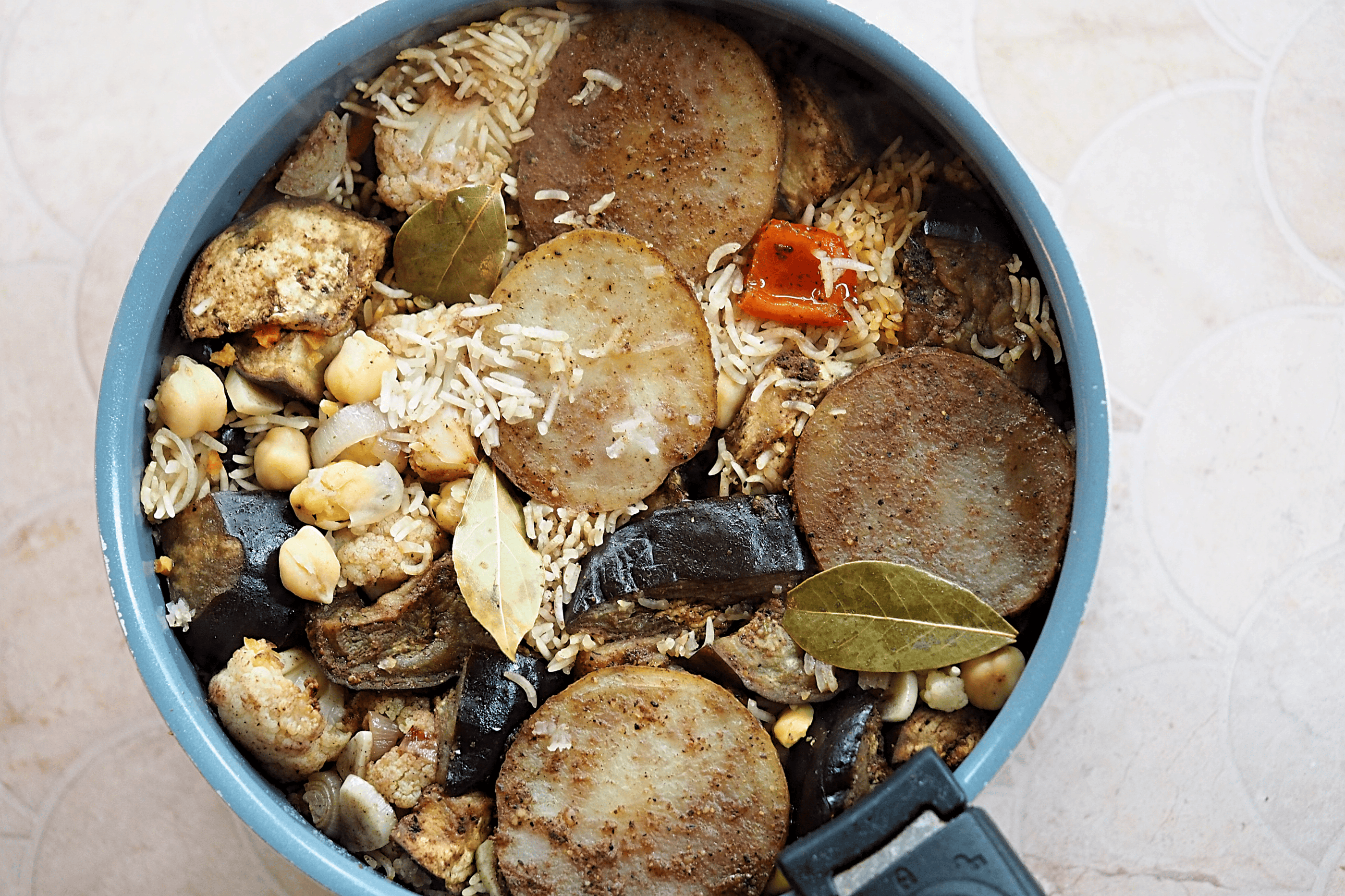
When it comes to building your upside-down rice, there are a few rules of thumb. Namely, the tomato goes at the bottom to protect the dish as much as possible by providing a water-rich layer. I then sprinkle in some rice and add my red pepper, because this also has a high water content. Once the bottom of the pan is completely covered, you can more or less do as you wish, just keep layering the rice and and the garlic / shallot mix between each vegetable layer.
When preparing the stock, you generally want a ratio of up to 2 parts liquid to 1 part rice. Using 250ml of rice, I initially made my stock with 400ml of water. I recommend starting with a lower amount of liquid and adding more if needed, as you can’t exactly remove water once it’s in there!
My final tip is that once you perform your flip (the most edge-of-your-seat moment!) , don’t remove the pan right away; let it sit on top of the plate for 10 minutes. This just allows the shape to settle and reduces the likelihood of it all collapsing. A little bit of collapse is pretty usual. Either way, it’ll taste great, it just depends how much you want that dinner party centrepiece!
Vegetable Upside-Down Rice
A vegetable-packed spiced rice dish
Ingredients
- 250g of whole wheat basmati rice (rinsed thoroughly and soaked for 30 mins in cold water)
- 400-500ml of boiling water (prepared immediately prior to assembly)
- 1 vegetable stock cube
- 1 tbsp of tomato paste
- 10g of Baharat spice mix
- 1 aubergine (cut into chunks)
- 1 red pepper (sliced)
- 1/2 a small / medium head of cauliflower (broken into florets)
- 1 potato (sliced)
- 4 cloves of garlic (sliced)
- 1 shallot (sliced)
- 100g of pre-cooked chickpeas (drained and rinsed)
- 1 tomato (sliced)
- 3 bay leaves
- 1 tsp of cinnamon powder or 1 whole cinnamon stick
- 25g of blanched almonds (optional topping)
- A small handful of parsley (de-stemmed and roughly chopped) (optional topping)
- Plenty of olive oil for cooking
- Salt and pepper to taste
Directions
- Rinse and leave the rice to soak and preheat the oven to 180C whilst preparing the vegetables
- One by one, toss the cauliflower, red pepper, aubergine and potato chunks / slices in olive oil, Baharat, salt and pepper and add them to a sheet pan (spread them out so they aren’t piled on top of each other and bake in the oven for 25-30 minutes (stirring / turning halfway through)
- In a medium / large non-stick lidded saucepan, sauté the garlic and shallot over a medium heat until fragrant before removing from the pan
- Toast the blanched almonds over a medium-low heat for a few minutes on each side until they pick up some colour, once they’re cooled then slice them in half and set aside
- When the oven-roasted vegetables are almost done, boil the kettle
- Drain the rice and prepare your vegetable stock with an initial 400ml of boiling water, the tomato paste and stock cube dissolved in
- Mix the rice in with the remaining Baharat, salt and pepper (if using ground cinnamon, stir this in too)
- Take your non-stick, handled pan and begin building the dish by drizzling some olive oil and placing the tomato slices on its base (wet side down for the end slices), sprinkle over some rice
- Proceed to do a layer of vegetables, sprinkle over rice and the shallot / garlic aromatic mix and the chickpeas and repeat – this doesn’t need to be in any specific order, but I recommend starting with the water-rich red pepper as your first layer after the tomato until the base is completely covered
- Once you’ve added all of your layers of vegetables with the rice and aromatic mix sprinkled throughout, carefully pour over the stock cube, ensuring you get an even distribution (some people use a ladle to control the flow of the stock)
- Use a spatula to press down the vegetables and rice
- Place the whole spices on top of everything and put the pan on your hob over a medium-high heat for 10 minutes and cover
- Once the water is bubbling, reduce the heat right down to a low simmer and cover; it should take around 30 minutes for all the water to be absorbed (you can add an additional 50-100ml if the rice at the top is not cooking)
- When your rice is cooked and no excess water is sitting on top of things, it’s time to flip the pan
- Remove the whole spices if you wish and put a large plate that covers the saucepan opening completely on top of it
- Hold the plate over the saucepan opening (use oven gloves, if needed) and flip it so it’s on the bottom; hit the bottom of the pan to loosen everything and leave it to rest like this for 10 minutes
- Remove the saucepan and you should have a maqluba – your tomatoes might be burnt or edible, you may have crisped edges or a perfect cook; there’s a lot of variation, but you’re now ready to serve this dish as a main or side with some fresh herbs or nuts sprinkled over the top

Let me know if you try my take on Maqluba!
 But First, Food
Leave a comment